As China’s domestic precision manufacturing industry continues to evolve toward miniaturization and high consistency, the surface‑treatment technology for components has become a key factor restricting product yield. Traditional treatment methods such as sandblasting, chemical immersion and manual polishing tend to cause problems including substrate damage, surface residues and inconsistent batch performance when applied to high‑precision workpieces. Featuring non‑contact cleaning, laser cleaning has gradually become a preferred surface‑treatment solution in the field of precision manufacturing, bringing brand‑new technical ideas to the production of high‑end components.
I. Practical Pain Points of Traditional Cleaning Processes in Precision Manufacturing Scenarios
Precision manufacturing covers multiple segmented tracks including semiconductor packaging, new‑energy components, aerospace precision structural parts, precision molds, and medical device accessories. Workpieces often have stringent requirements for dimensional tolerances, surface roughness and substrate integrity.
Sandblasting and polishing remove contaminants via external frictional force, which tends to leave micro‑scratches on workpiece surfaces. Thin‑walled and micro‑parts are also at risk of deformation, impairing original machining accuracy. Chemical cleaning dissolves oxide layers and oil stains with solvents, yet it may cause chemical residues. Waste liquid and residues require subsequent disposal, incurring high environmental‑protection costs, and certain sensitive materials may suffer corrosion. Ultrasonic cleaning has limited cleaning performance when dealing with complex micro‑holes and special‑shaped curved surfaces. Impurities inside tiny gaps can hardly be fully eliminated, which indirectly triggers hidden troubles in subsequent processes such as welding, bonding and coating.
Many manufacturers are caught in a dilemma: incomplete cleaning leads to defective products, while the cleaning process may damage workpiece substrates and raise production losses. It has become an urgent demand for numerous precision‑manufacturing enterprises to find processes that balance cleaning performance, substrate protection and production stability.
II. Core Application Value of Laser Cleaning for Precision Manufacturing
Laser cleaning uses high‑energy pulsed laser beams to act directionally on workpiece surfaces, stripping off contaminants such as oxide layers, oil stains, carbon deposits and coating residues. It makes no physical contact with the base material. Through parameter adjustment, its action range can be precisely controlled to meet the processing requirements of precision workpieces.
1. Targeted cleaning to preserve the original precision of workpieces
Laser cleaning enables accurate and precise control. It only removes surface contaminants while keeping the base material intact without altering the original dimensional tolerances of workpieces. For precision mold cavities and semiconductor packaging components, it can clear residues inside gaps and grooves without scratching precision mating surfaces, thus guaranteeing assembly accuracy. Workpieces treated by laser cleaning feature controllable surface roughness, laying a solid foundation for subsequent processes including welding, bonding and coating, and effectively reducing the incidence of defects such as cold solder joints and coating peeling.
2. Reproducible processes suitable for large‑scale mass production
In mass‑production scenarios of precision manufacturing, consistent processing results for each batch of workpieces are highly required. Laser cleaning equipment from Shanghai Shengtong Laser supports parameter presetting. The same set of process parameters can be recalled repeatedly to minimize result discrepancies caused by manual operation. Capable of handheld standalone operation as well as integration with robots and multi‑axis motion platforms, the equipment can be incorporated into automated production lines to satisfy demands for continuous mass production of components and help enterprises implement lean production modes.
3. Eco‑friendly dry‑type cleaning to cut overall production burdens
Laser cleaning requires no consumables such as chemical agents or abrasive sandpaper, eliminating relevant expenses for hazardous waste disposal and chemical procurement. For precision manufacturing workshops, it avoids safety hazards triggered by chemical reagents and reduces administrative costs related to waste liquid and residue treatment, aligning with the current development trend of green manufacturing.
4. Expanded material compatibility covering various precision workpieces
Workpieces across different segments of precision manufacturing vary greatly in material, and surface cleaning needs exist for metal alloys, composite materials and certain non‑metallic precision parts. By tuning laser parameters, laser cleaning is compatible with diverse materials including titanium alloys, aluminum alloys, copper materials and carbon‑fiber composites, performing diverse tasks such as oxide removal, degreasing, degumming and elimination of coating residues. A single unit can handle cleaning tasks for multiple types of workpieces and improve overall equipment utilization.
III. Typical Application Scenarios of Laser Cleaning in Precision Manufacturing
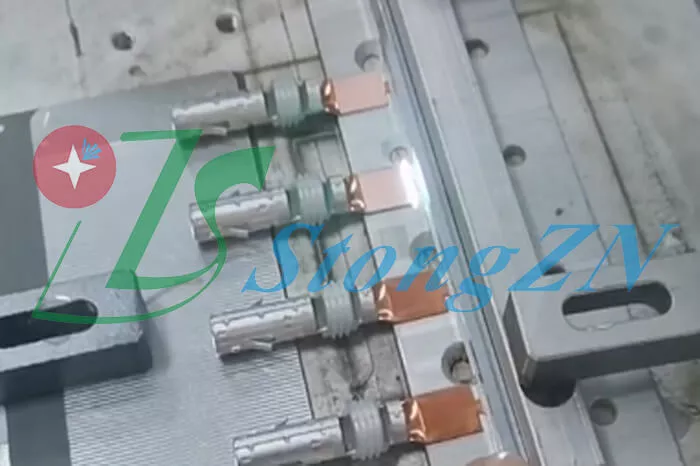
In the semiconductor packaging process, laser cleaning is applied to remove oxide layers and flux residues on lead frames and bond pads, reducing the risk of bonding failures caused by micro‑impurities and improving the yield of chip packaging. In the new‑energy industry, it performs pre‑welding pretreatment on pole tabs and precision connectors to eliminate surface oil contamination and oxide layers, enhancing welding stability. For the manufacturing of aerospace precision components, it removes scale on fasteners and small structural parts while preserving the mechanical properties of base materials. In the maintenance of precision injection‑molding and stamping dies, it cleans carbon deposits and residues inside die cavities without damaging fine die textures, thus extending die service life. For precision medical‑device components, it delivers residue‑free cleaning to meet industrial cleanliness standards.
Shanghai Shengtong Laser focuses on the R&D and manufacturing of laser‑cleaning equipment. Tailored for diverse working conditions in precision manufacturing, it offers complete laser‑cleaning solutions including handheld standalone units and automated integrated systems, catering to both small‑sample debugging in laboratories and mass production in factories. Should you have demands for workpiece sampling, process evaluation or equipment selection, please contact 17765167873 (WeChat ID identical to this number) for technical support.
Amid the wave of manufacturing upgrading, precision manufacturing keeps raising standards for surface treatment. Boasting features such as high precision, automation compatibility and environmental‑friendliness, laser cleaning is transforming the landscape of conventional cleaning processes. Shanghai Shengtong Laser keeps refining both software and hardware of its laser‑cleaning equipment, supplying proven and feasible surface‑treatment solutions for the precision‑manufacturing sector. It helps manufacturers optimize production processes, cut workpiece rejection losses, and achieve dual improvements in quality and economic benefits.