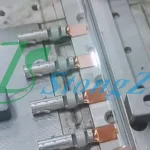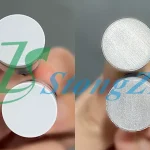
During the production of rubber products, rubber molds operate under high‑temperature vulcanization conditions for extended periods. Oxide layers, vulcanization residues and release agent deposits readily form on the cavity surfaces. The continuous build‑up of oxide layers leads to defects such as pitting, color difference and blurred patterns on finished rubber products. It also gradually corrodes the mold substrate, accelerates mold wear and raises enterprises’ costs for mold replacement and maintenance. Conventional cleaning methods including sandblasting, chemical soaking and manual polishing struggle to balance cleaning performance and mold protection. Shanghai Shengtong laser cleaning equipment provides a non‑damaging cleaning solution tailored for oxide removal on rubber molds. It removes oxide contaminants while preserving the mold substrate and effectively extending mold service life. To learn about actual working conditions and equipment quotations, please call 13764936270 (WeChat ID identical to the phone number) for a solution.
I. Core Working Principle of Laser Cleaning for Rubber Molds
Shanghai Shengtong Laser Cleaning carries out oxidation cleaning operations for rubber molds relying on high‑frequency short‑pulse lasers. High‑energy beams of specific wavelengths are absorbed by rust layers, paint layers and contamination layers, generating rapidly expanding plasma together with shock waves. The shock waves shatter contaminants into fragments and remove them.
II. Outstanding Advantages of Shanghai Shengtong Laser Cleaning for Rubber Molds
In the oxidation maintenance scenario of rubber molds, Shanghai Shengtong laser cleaning has multiple practical advantages over traditional cleaning processes in terms of mold‑protection capability, operational efficiency and environmental‑friendliness.
First, it delivers non‑destructive mold protection and extends mold service life. Laser cleaning is a non‑contact cleaning method with no abrasive impact or chemical reagent corrosion. After cleaning, the original roughness, pattern textures and dimensional accuracy of molds can be preserved. It avoids micro‑scratches caused by sandblasting and grinding as well as substrate corrosion resulting from chemical cleaning, reduces abnormal mold wear‑and‑tear induced by cleaning, prolongs mold service cycles and cuts enterprises’ capital expenditure on purchasing new molds.
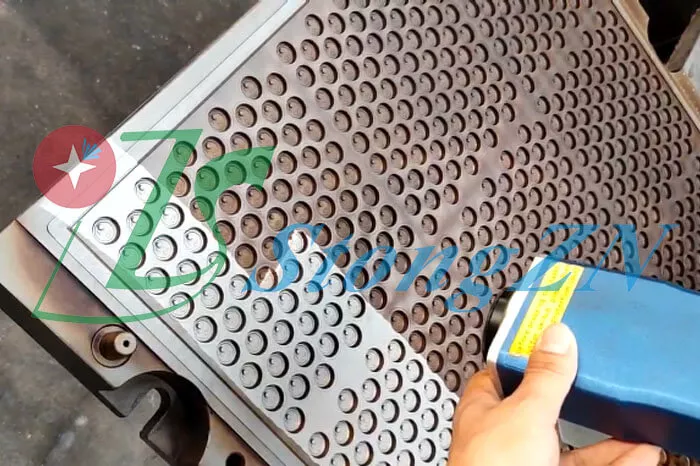
Second, it enables convenient operations and shortens mold downtime. Shanghai Shengtong laser cleaning equipment supports flexible optical‑fiber output. Under some working conditions, molds can be cleaned on‑machine without complete disassembly, eliminating cumbersome procedures such as disassembly‑assembly, soaking and drying. For rubber molds with different oxidation thicknesses, rapid operations can be performed by adjusting corresponding parameters. Cleaned molds require no secondary treatment and can be directly put into vulcanization production, shortening production‑line waiting time and improving the overall operational efficiency of factories.
Furthermore, there is the green dry‑operation approach to ease environmental‑protection pressure. The entire laser‑cleaning process requires no acid‑alkali solvents or abrasive auxiliary materials, generating no waste liquid or waste residues. The operation site remains clean and tidy, complying with the green‑production requirements of the manufacturing industry and eliminating the supporting costs and management procedures for hazardous‑waste disposal.
Meanwhile, the equipment features broad adaptability. For rubber molds of different materials, laser parameters can be flexibly adjusted to handle thin oxide layers as well as stubborn, thick oxide deposits. It works for both flat cavities and complex special‑pattern molds, meeting the maintenance demands for various molds such as rubber‑component molds and tire molds.
III. Enterprise R&D and Production Strength: Consolidating the Quality Foundation of Laser Cleaning Equipment
As a manufacturer of laser cleaning machines, Shanghai Shengtong Laser is deeply engaged in the R&D and manufacturing of industrial laser‑cleaning equipment. It focuses on industrial application scenarios such as mold cleaning and industrial oxide layer removal, and has built a complete system covering equipment development, complete‑machine production and on‑site commissioning services.
Shanghai Shengtong Laser has an independent technical R&D team. To address the cleaning pain points of precision tooling such as rubber molds, the team continuously optimizes laser optical paths and parameter control systems. Standardized management procedures have been established for core component selection, complete‑machine assembly and factory testing. Before delivery, every laser cleaning device from Shanghai Shengtong Laser undergoes cleaning tests simulating mold oxidation conditions to guarantee real‑world cleaning performance.
For rubber‑manufacturing enterprises, Shanghai Shengtong Laser provides one‑stop supporting services including equipment selection, process sample testing, on‑site commissioning and operation training. Enterprises may send rubber mold samples for treatment to receive free tests on the actual laser cleaning effect against oxidation and directly observe the surface condition of molds after cleaning. For sample testing and equipment inquiries, please contact 13764936270 (WeChat ID identical to the phone number) for communication.
Oxidation maintenance for rubber molds has become an indispensable production link for rubber manufacturers. Based on high‑frequency short‑pulse laser technology, Shanghai Shengtong Laser Cleaning achieves non‑destructive removal of oxide layers on rubber molds, balancing cleaning performance, mold protection and production efficiency, and delivers reliable equipment support for mold maintenance in the rubber industry. If your factory is troubled by rubber mold oxidation and mold damage caused by conventional cleaning methods, please get in touch with Shanghai Shengtong Laser for customized mold‑cleaning solutions tailored to your production‑line conditions.